Well I'm getting a bit closer to rebooting my blogs.
I have been looking at setting things up on WordPress and/or Wix.
Basically I want to keep the same format as I have on Blogger. That is the ability to have multiple blogs because I want to keep them separate so that people interested in specific topics can access posts related to that niche without being distracted by other posts on other topics.
I guess that the Flora and Fauna - Plants and Critters Blog will remain the primary and biggest blog in part because I have already written a lot on posts over the years.
I just need to sort out how to set things up as well how to manage the financial and legal issues.
That is how to finance the website and how to manage the IP rights.
Thursday, 23 April 2020

Saturday, 21 March 2020
Changes to this blog
I have not posted anything on this for a while. There are several reason.
I am sorry if people have been wanting to read more posts and see more photos but because of this last reason I am very reluctant to continue to post new material. Taking the photos, researching the material for the posts and writing the up take a lot of time and it is not really fair to expect someone to do this if they cannot get any financial benefit out of their work and worse if others are deriving financial benefits while the person who created the works is not able to do so. Hopefully I will get things sorted out and resume posting new material. I actually have a whole series of posts still in draft form waiting to be posted.
- I have been busy completing an LLM in Intellectual property and ICT Law
- Trying to get a small independent publishing company: Island Ink Publishing Co. Ltd. off the ground.
- I have been wanting to tidy up the blog edit posts and generally reorganize the blog
- I have been working on trying to compile some books using material I have used in the blog.
- One area is basically a series of books based on the Intriguing Plants category which will include what I have already posted on but with additional information. In essence going much more into depths in covering various plants.
- Another is a separate series of stand alone books looking plants from various perspectives one being poisonous plants.
- Another category of books are approaching plants from a legal perspective. ie legal issues related to plants and gardening. Basically combining my passion for botany, horticulture, photography and law.
- I was also stopped posting things because I was angry when I tried to monetize my blog and was told that I was ineligible due to suspicious activity which I traced to some people diverting dodgy traffic through my blog posts as well as using some of my photos as click bait to divert traffic to dodgy sites. So not only was I prevented from being able to gain some revenue from my own work but others were infringing on my copyright not to mention using my work in relation to sites that I certainly do not want to be associated with.
I am sorry if people have been wanting to read more posts and see more photos but because of this last reason I am very reluctant to continue to post new material. Taking the photos, researching the material for the posts and writing the up take a lot of time and it is not really fair to expect someone to do this if they cannot get any financial benefit out of their work and worse if others are deriving financial benefits while the person who created the works is not able to do so. Hopefully I will get things sorted out and resume posting new material. I actually have a whole series of posts still in draft form waiting to be posted.
Monday, 29 August 2016
Some rooftop garden fruits and flowers
Well it looks like I'll be leaving Bristol after three years here. Two of those years have been in a flat above the Bristol Music Store where I sort of let my need for plants go a wee bit out of hand.
Our living room / kitchen had plants in every window and then some in a corner that got sunlight. I never turned the heaters on in my bedroom because they were situated infront of the windows and were covered in plants as was the wardrobe which is close enough to one of the tall windows to get lots of light.
Then since there was a flat area of roof out side that I put a few pots out on and then a few more. My bedroom windows were the designated "Fire Escape" although once onto the flat roof there was no way down and as that flat area was surrounded my higher roof areas ... no one on the ground can see you unless you managed to scramble up onto sloping roof and get attention while making sure you did not slip and fall from three story height.

In any case although I had battles with marauding seagulls who pulled up seedlings and scattered them with malicious calculation and searing heat during summer I did manage to get some strawberries as well as some Siberian Irises, Lilies and Agapanthus to flower as well including onions.
 The Lilies were pretty cool because they started of orange and then changed to a Deep red. I cannot remember what the variety was. The flowers of the first year were pitiful and I almost threw them all away in annoyance because as with some of the other plants I had gotten the actual flowers did not come anywhere close to the ones in the photo on the label.
For example the Calla lily which was supposed to be a brilliant yellow came out green. And when I say green I mean it was the exact same colour as the leaves abd stems so unless you noticed that it was not a leave due it's shape being different you would not even know there was a flower there.
The red onions I planted were actually intended for the kitchen but although they all flowered for two consecutive years none got to the size they were supposed to be so although I did harvest a couple and use them it seemed pointless although at least the flowers were intriguing and quite beautiful so it was not a waste of time.

I was disappointed that the giant garlic did not grow much either. Some just grew huge leaves and then vanished. I think at least one was stolen by the seagulls with whom I have a running feud because of their malicious destructiveness. One more than one occasion when I heard sounds outside and went to check and found one up to no good the pestilent creature glared at me when I shouted at it It looked like it was challenging me too, before it decided I was beneath it and flew off very casually.
Our living room / kitchen had plants in every window and then some in a corner that got sunlight. I never turned the heaters on in my bedroom because they were situated infront of the windows and were covered in plants as was the wardrobe which is close enough to one of the tall windows to get lots of light.
Then since there was a flat area of roof out side that I put a few pots out on and then a few more. My bedroom windows were the designated "Fire Escape" although once onto the flat roof there was no way down and as that flat area was surrounded my higher roof areas ... no one on the ground can see you unless you managed to scramble up onto sloping roof and get attention while making sure you did not slip and fall from three story height.

In any case although I had battles with marauding seagulls who pulled up seedlings and scattered them with malicious calculation and searing heat during summer I did manage to get some strawberries as well as some Siberian Irises, Lilies and Agapanthus to flower as well including onions.

For example the Calla lily which was supposed to be a brilliant yellow came out green. And when I say green I mean it was the exact same colour as the leaves abd stems so unless you noticed that it was not a leave due it's shape being different you would not even know there was a flower there.
The red onions I planted were actually intended for the kitchen but although they all flowered for two consecutive years none got to the size they were supposed to be so although I did harvest a couple and use them it seemed pointless although at least the flowers were intriguing and quite beautiful so it was not a waste of time.

I was disappointed that the giant garlic did not grow much either. Some just grew huge leaves and then vanished. I think at least one was stolen by the seagulls with whom I have a running feud because of their malicious destructiveness. One more than one occasion when I heard sounds outside and went to check and found one up to no good the pestilent creature glared at me when I shouted at it It looked like it was challenging me too, before it decided I was beneath it and flew off very casually.
Notes:
- I am using the taxonomical classification system used by ITIS (Intergrated Taxonomic Information System). I have decided to use this system in order to avoid confusion as well as because it offers a comprehensive hierarchy from kingdom right through to subspecies whereas other sources only go as far as order or provide the names of some of the higher taxonomical ranks but only indicate "unclassified" rather than providing the rank.
- When and where possible I will endeavour to include alternatives classifications although I may limit this to occasions where an opportunity arises to discuss the reason for the different classifications.
- Flora and Fauna - Plants and Critters Blog by Vincent Albert Vermeulen is licensed under a Creative Commons Attribution-NonCommercial-ShareAlike 3.0 Unported License.
Based on a work at http://plantsandcritters.blogspot.be/.
Permissions beyond the scope of this license may be available at http://plantsandcritters.blogspot.be/.
My other blogs
· Flora and Fauna - Plants and Critters (on plants, animals as well as gardening, conservation and environmental matters): http://plantsandcritters.blogspot.com/
· The Blood of Souls (language, translation and etymology) : http://thebloodofsouls.blogspot.com/
· Whiskers on Kittens (Life with Kittens and Cats in general) : http://whiskersonkittens-vincent.blogspot.com/
Saturday, 9 July 2016
Upcoming posts
It has been a while since I posted anything new due to assignments, research projects and exams taking up my time.

As I mentioned in my most recent post I'm now getting on with a whole lot of housekeeping issues related to this blog as well as my other blogs.
I am currently in the process of going through all the drafts that I had been working on before I had to put things on the back burner to see what needs to be done to complete them. This can range from:

 Anyway ... its a long slow tedious process which requires time, patience, persistence and meticulous attention to details. Hence the long wait ... Also as this includes fixing up published posts and adding to the lexicons, the lack of new posts gives the illusion that nothing is happening. So, to allay this I thought it might be a good idea to lay out some of the primary posts that I am hoping to get completed over the next few months:
 Incidentally I will be also working on my other blogs including my blog on etymology, language and translation issues: The Blood of Souls (which takes a lot more time researching and writing) as well as a couple other blogs which are in the process of transformation or formulation.
I also am hoping to get a crowdfunding project to publish a volume of poetry entitled: Dragon Waif: A selection of sketches from the other side of my soul.
I'm also planning on a few more photo expeditions to botanical gardens and other sites for material to use in this blog and others.
Flora and Fauna - Plants and Critters Blog by Vincent Albert Vermeulen is licensed under a Creative Commons Attribution-NonCommercial-ShareAlike 3.0 Unported License.
Based on a work at http://plantsandcritters.blogspot.be/.
Permissions beyond the scope of this license may be available at http://plantsandcritters.blogspot.be/.
· The Blood of Souls (language, translation and etymology) : http://thebloodofsouls.blogspot.com/

As I mentioned in my most recent post I'm now getting on with a whole lot of housekeeping issues related to this blog as well as my other blogs.
I am currently in the process of going through all the drafts that I had been working on before I had to put things on the back burner to see what needs to be done to complete them. This can range from:

- Adding photos - which necessitates my hunting through gigabytes of photos to find the ones I need. Although, fortunately I have them filed according to date and location. I have also slowly been adding the appropriate tags to my already vast and growing photo archive. Once I have found the photos I want to use in a post I then need to resize them. I need to do this because I tend to take photos at the highest resolution possible but I cannot use those photos because that will impact on the accessibility of my blog by people whose computers / internet access prevents them from processing such high resolution photos. Having been in that situation I know the impact of high resolution photos and web pages that crash or take ages to load due to limited internet speed or processing power or worse ... eating up a whole months worth or internet megabytes (yes some parts of the world you pay by megabyte not gigabyte). So once I have done that the only thing left other than cropping if necessary is to upload the photo and add the caption.
- Finish writing the post or rewriting the post. That can range from:
- Things as simple as just rereading what has been written and then finishing it off.
- Verifying some information from reputable sources (which I can then include in the references). Sometimes this leads to new information or contradictory information which I then need to sort out and figure out what is based on solid science and what is pseudo-scientific nonsense. Sometimes it leads to controversy or simply to a debate over something ... which while it complicates things and delays completion of the post as it means I need to read more on the subject, it also means that there is an additional element that I can write about or at least mention, depending on how important the controversy or debate is. Something as simple as the reclassification of a plant could end up in a simple paragraph explaining why this happened or if it is the reclassification of a whole genus or family then that might take a bit more. Or if it is over the efficacy of certain properties then that might start getting a bit technical. Sometimes when that happens I turn to some experts I know to read what I wrote to make sure it makes sense and is correct. In which case I acknowledge their assistance.

- Adding all the appropriate tags / labels so that the post appears in web searches as well as so that people can find stuff internally by going to the labels and seeing what s available
- Adding all the references and their web links
- Reformatting the font, text and general presentation of the data so that the whole blog has a uniform look as well as making it easier for people to know exactly where to find information they want in each post.


SOME UPCOMING POSTS
- Propagation of African Violets
- Intriguing Plants: Giant Hogweed, Heracleum mantegazzianum
- Intriguing Plants: Umbrella Liverwort, Marchantia polymorpha
- Intriguing Plants: Strawberries
- Intriguing Plants: Adendium, Desert Rose
- Intriguing Plants: African Violets
- Carnivorous Plants: Sarracenia psittacina
- Carnivorous Plants: Nepenthes
- Carnivorous Plants: Drosera capenis, the Cape sundew
 Incidentally I will be also working on my other blogs including my blog on etymology, language and translation issues: The Blood of Souls (which takes a lot more time researching and writing) as well as a couple other blogs which are in the process of transformation or formulation.
I also am hoping to get a crowdfunding project to publish a volume of poetry entitled: Dragon Waif: A selection of sketches from the other side of my soul.
I'm also planning on a few more photo expeditions to botanical gardens and other sites for material to use in this blog and others.
Flora and Fauna - Plants and Critters Blog by Vincent Albert Vermeulen is licensed under a Creative Commons Attribution-NonCommercial-ShareAlike 3.0 Unported License.
Based on a work at http://plantsandcritters.blogspot.be/.
Permissions beyond the scope of this license may be available at http://plantsandcritters.blogspot.be/.
My other blogs
· Flora and Fauna - Plants and Critters (on plants, animals as well as gardening, conservation and environmental matters): http://plantsandcritters.blogspot.com/· The Blood of Souls (language, translation and etymology) : http://thebloodofsouls.blogspot.com/
· Whiskers on Kittens (Life with Kittens and Cats in general) : http://whiskersonkittens-vincent.blogspot.com/
Friday, 8 July 2016
One more eye candy posts
Here is another quick eye candy post. Some of these will be appearing in some upcoming posts.

Flora and Fauna - Plants and Critters Blog by Vincent Albert Vermeulen is licensed under a Creative Commons Attribution-NonCommercial-ShareAlike 3.0 Unported License.
Based on a work at http://plantsandcritters.blogspot.be/.
Permissions beyond the scope of this license may be available at http://plantsandcritters.blogspot.be/.
· The Blood of Souls (language, translation and etymology) : http://thebloodofsouls.blogspot.com/
 |
| Irises |
 |
| Magnolias in Fort Royal Gardens - Bristol |
 |
| Fort Royal Gardens - Bristol |
 |
| Waterlilies- Bristol University Botanical Gardens |

 |
| Love-in-the-mist (Nigella damascena) - Cabot Tower Gardes - Brandon Hill |
 |
| Magnolias at Fort Royal Gardens with Physics Building in the Background |
 |
| Siberian Irises (Iris sibirica) - On rooftop outside my bedroom in Bristol |
Flora and Fauna - Plants and Critters Blog by Vincent Albert Vermeulen is licensed under a Creative Commons Attribution-NonCommercial-ShareAlike 3.0 Unported License.
Based on a work at http://plantsandcritters.blogspot.be/.
Permissions beyond the scope of this license may be available at http://plantsandcritters.blogspot.be/.
My other blogs
· Flora and Fauna - Plants and Critters (on plants, animals as well as gardening, conservation and environmental matters): http://plantsandcritters.blogspot.com/· The Blood of Souls (language, translation and etymology) : http://thebloodofsouls.blogspot.com/
· Whiskers on Kittens (Life with Kittens and Cats in general) : http://whiskersonkittens-vincent.blogspot.com/
Wednesday, 6 July 2016
Just a quick eye candy post to keep you happy
I thought I should post some eye candy for those who want to see some more photos, while I'm working at getting some more posts that are more detailed.
Flora and Fauna - Plants and Critters Blog by Vincent Albert Vermeulen is licensed under a Creative Commons Attribution-NonCommercial-ShareAlike 3.0 Unported License.
Based on a work at http://plantsandcritters.blogspot.be/.
Permissions beyond the scope of this license may be available at http://plantsandcritters.blogspot.be/.
· The Blood of Souls (language, translation and etymology) : http://thebloodofsouls.blogspot.com/
 |
| Lilies - University of Bristol Botanical Gardens |
 |
| Borago officinalis - Cabot Tower Garden |
 |
| View of the Gate house and footbridge at Chateau Grand-Bigard - during Floralia Brussels |
 |
| Cherry Blossoms - Bristol |
 |
| Cactus garden in Antwerp Botanical Gardens |
 |
| Crocuses in the Fort Royal Gardens - Bristol |
 |
| Waterlilies at University of Bristol Botanical Gardens |
 |
| African Violets - My room in Bristol |
Flora and Fauna - Plants and Critters Blog by Vincent Albert Vermeulen is licensed under a Creative Commons Attribution-NonCommercial-ShareAlike 3.0 Unported License.
Based on a work at http://plantsandcritters.blogspot.be/.
Permissions beyond the scope of this license may be available at http://plantsandcritters.blogspot.be/.
My other blogs
· Flora and Fauna - Plants and Critters (on plants, animals as well as gardening, conservation and environmental matters): http://plantsandcritters.blogspot.com/· The Blood of Souls (language, translation and etymology) : http://thebloodofsouls.blogspot.com/
· Whiskers on Kittens (Life with Kittens and Cats in general) : http://whiskersonkittens-vincent.blogspot.com/
Saturday, 4 June 2016
Resuming posts and updating lexicons and glossaries
Well now that exams are over. I will be trying to fit in some time to do some work on "Flora and Fauna - Plants and Critters." This will include:
- Completing some of the posts I had been working on but put on hold. This includes:
- Doing the research for the write up on a plant (or fungus, animal, virus, bacteria) or issue
- Choosing the photos or taking the necessary photos, cropping/resizing the photos and uploading them
- Verifying any information I use such as botanical, phytochemical and ethnobotanical information as well as medicinal uses both scientifically proven and otherwise. This includes providing sources / reference and hyperlinks where possible.
- Adding all the captions to all the photos
- Looking up, verifying and adding the scientific / binomial names and common /vernacular names in English and other languages (where I am able to find them)
- Including all the relevant tags
- Add relevant internal links either to other posts within the blog or to my other blogs where I have covered a plant or topic from a different perspective. For example I have a couple cross posts in The Blood of Souls where I discuss some translation issues regarding the cicada and its song. I also have an almost completed post speculating on the etymology of a plants name which I think is particularly interesting that will be tied to a post on the plant itself which still needs a lot of work and verifying of information since it includes medical and phytochemical information which I want to check in detail as well as run by some people who should have the expertise to be able to tell me if I have presented the information correctly.
- YES - I do put a lot of effort in trying to make sure that the information that I post is correct and if I find or am told that I have made an error I make the correction as quickly as possible and acknowledge the error and the person who pointed (out with thanks). I also endeavor to acknowledge those who have helped identify a plant (fungus, animal etc) or provided information or assistance.
- Publishing completed posts
- Going over published posts;
- Checking for typos and other errors
- Reformatting them so that they are all uniform (especially the layout / presentation of botanical and other information)
- Checking the tags
- Adding links and additional data
- Adding common vernacular names in other languages
- Adding to my Glossaries:
- Glossary of Botanical and Horticultural terms
- Glossary of Medical and Scientific terms
- Which I think may be more logical to just merge into one glossary
- Adding to the Lexicons
- Lexicon of Scientific/Binomial Names - Common/Vernacular Names
- Lexicon of Common/Vernacular Names - Scientific/Binomial Name
- The second which I need to think about ab bit more on how to incorporate multiple language entries i.e. all in one or have a separate one for each.
- Adding to the "Useful Links" which includes not only the hyperlinks to useful sites but also includes:
- A description of what kind of website it is
- A brief overview of the type of information to be found i.e. what sorts of resources it has
- Any other useful information about the website
- Updating the Index
- Visiting some more botanical gardens and places to get more photos of plants and critter. Hopefully I will finally be able to get around to contacting an apiculturist so I can get some decent Bee photos and beehive photos so I can do my long planned Bee posts.
- I will also be looking into the possibility of providing higher resolution photos for those who want to look at them because at the moment I have sought to increase accessibility of my blog by catering to viewers who may not have access to high speed internet and may also be restricted to a monthly megabytes cap. So I will be looking into ways to accommodate both types of users. I have seen other webpages offer two types of resolution. Of course that will take a while to set up as I will then need to go back and hunt through my archives for the original high resolution files.
Tuesday, 9 February 2016
Roof garden: Part 1
Sorry I should have posted this in Winter 2014-15 instead of Winter 2015-16

In anticipation of Spring along with an undeniable craving for more plants around me I think I got a bit carried away buying bulbs, seeds and seedlings to grow. On the heater (which I do not use) under one window amidst the African violets (Saintpaulia) are some Daffodils (Narcissus) and Grape hyacinths (Muscari neglectum), not to mention to Begonias which I am still waiting to see signs of life from.
 So with one window chock full of plants already I pretty much did the same to the other. Here (above) I have Asiatic Lilies (Lilium), Siberian Irises (Iris sibirica), Dicentras (Lamprocapnos spectablis), Aquellegias and Fuscias.
I also have more pots of lily bulbs on top of my cupboard.
What can I say they were on sale and my green fingers started itching when I saw them. Okay there were several other reasons. One being that I wanted to be able to get photos of more plants as well as more varieties within each genus or even species (variations and sub species). Another reason was that having the plant myself would mean that I could be in a better position to photograph it at leisure not to mention manipulate it better and even cut the flowers and or pull the whole plant up to photograph its root structure etc.
Basically owning a plant gives me much greater flexibility, freedom and control over what and how I could photograph it especially if I want to take more detailed photos showing specific characteristics of certain plants. I also wanted to be able to show the planting and growth process.
 Then as you can see how things were getting a bit crowd with onion and garlic bulbs, Hostas, Dutch irises and Glorisia lilyies and fuscias e inside which is why it was getting a bit crowded.
On the window sill outside I put some Nasturtiums that I had transplanted from their seeding tray into some planting troughs. I was worried about the cold but the seem to be doing fine so far. The daytime lows are around 10 degrees Celsius which is why due to our fridge being too small for the number of people in our flat, I often put milk outside on those few occasions I buy milk. So far the plants I have decided to risk outside seem to be holding up.

In anticipation of Spring along with an undeniable craving for more plants around me I think I got a bit carried away buying bulbs, seeds and seedlings to grow. On the heater (which I do not use) under one window amidst the African violets (Saintpaulia) are some Daffodils (Narcissus) and Grape hyacinths (Muscari neglectum), not to mention to Begonias which I am still waiting to see signs of life from.
I also have more pots of lily bulbs on top of my cupboard.
What can I say they were on sale and my green fingers started itching when I saw them. Okay there were several other reasons. One being that I wanted to be able to get photos of more plants as well as more varieties within each genus or even species (variations and sub species). Another reason was that having the plant myself would mean that I could be in a better position to photograph it at leisure not to mention manipulate it better and even cut the flowers and or pull the whole plant up to photograph its root structure etc.
Basically owning a plant gives me much greater flexibility, freedom and control over what and how I could photograph it especially if I want to take more detailed photos showing specific characteristics of certain plants. I also wanted to be able to show the planting and growth process.
On the window sill outside I put some Nasturtiums that I had transplanted from their seeding tray into some planting troughs. I was worried about the cold but the seem to be doing fine so far. The daytime lows are around 10 degrees Celsius which is why due to our fridge being too small for the number of people in our flat, I often put milk outside on those few occasions I buy milk. So far the plants I have decided to risk outside seem to be holding up.
Binomial Name: Saintpaulia
Common names: African Violet (English); Violet African (French); (Samoan);
Taxonomic hierarchy:
Kingdom: Plantae - Plants
References:Kingdom: Plantae - Plants
Subkingdom: Viridaeplantae – Green plants
Infrakingdom: Streptophyta – Land plants
Superdivision: Embryophytea –
Division: Tracheophyta – Vascular plants, tracheophytes
Division: Tracheophyta – Vascular plants, tracheophytes
Subdivision: Spermatophytina – Spermatophytes (seed plants)
Infradivision: Angiospermae – Angiosperms (flowering plants)
Class: Magnoliopsida – Diocotyledons
Superorder: Asteranae – Asterids
Order: Lamiales –
Family: Gesneriaceae –
Genus: Saintpaulia –
Species: Saintpaulia inonatha, Saintpaulia rupicola, Saintpaulia brevipilosa
Notes:
- I am using the taxonomical classification system used by ITIS (Intergrated Taxonomic Information System). I have decided to use this system in order to avoid confusion as well as because it offers a comprehensive hierarchy from kingdom right through to subspecies whereas other sources only go as far as order or provide the names of some of the higher taxonomical ranks but only indicate "unclassified" rather than providing the rank.
- When and where possible I will endeavour to include alternatives classifications although I may limit this to occasions where an opportunity arises to discuss the reason for the different classifications.
- Taxonomical data used in this post was retrieved [February 11 2015], from the Integrated Taxonomic Information System on-line database, http://www.itis.gov.
Books:
On-line sources:
- Integrated Taxonomic Information System: Entry for Saintpaulia
- Integrated Taxonomic Information System: Entry for Narcissus
- Integrated Taxonomic Information System: Entry for Muscari neglectum
- Integrated Taxonomic Information System: Entry for Begonia
- Integrated Taxonomic Information System: Entry for Lilium
- Integrated Taxonomic Information System: Entry for Iris sibirica
- Integrated Taxonomic Information System: Entry for Dicentras spectablis
- Integrated Taxonomic Information System: Entry for Dicentras spectablis alba
- Integrated Taxonomic Information System: Entry for Aquellegias
- Integrated Taxonomic Information System: Entry for Fuscias.
- Integrated Taxonomic Information System: Entry for
- Integrated Taxonomic Information System: Entry for
- Integrated Taxonomic Information System: Entry for
- Integrated Taxonomic Information System: Entry for
- United States Department of Agriculture: Entry for Celosia argenta L.
- The Plant List: Entry for Celosia
- University of Tennessee Herbarium Entry for Celosia argentea
- Texas A & M University: Entry for Celosia (Celosia cristata)
- Missouri Botanical Garden: Entry for Saintpaulia ionatha
- Dave's Garden Entry for Celosia
- Grow African Violets
- Wikipedia: Entry for
- Wikipedia: Entry for
- Wikipedia: Entry for
- Wikipedia: Entry for
- Wikipedia: Entry for
- Wikipedia: Entry for Asparagales
- Wikipedia: Entry for Asparagaceae
- Wikipedia: Entry for Amaryllidaceae
- Wikipedia: Entry for Iridaceae
- Wikipedia: Entry for
- Wikipedia: Entry for
- Wikipedia: Entry for Iris sibirica
- Wikipedia: Entry for Lilium
- Wikipedia: Entry for
- Wikipedia: Entry for
- Wikipedia: Entry for
- Wikipedia: Entry for Liliales
- Wikipedia: Entry for Liliaceae
- Wikipedia: Entry for Muscari
- Wikipedia: Entry for Muscari neglectum
- Wikipedia: Entry for
- Wikipedia: Entry for
- Wikipedia: Entry for
- Wikipedia: Entry for
- Wikipedia: Entry for
- Wikipedia: Entry for Saintpaulia
- Wikipedia: Entry for Gesneriaceae
- Wikipedia: Entry for Lamiales
- Wikipedia: Entry for Asterids
- Wikipedia: Entry for Amaranthaceae
- Wikipedia: Entry for Caryophllales
Flora and Fauna - Plants and Critters Blog by Vincent Albert Vermeulen is licensed under a Creative Commons Attribution-NonCommercial-ShareAlike 3.0 Unported License.
Based on a work at http://plantsandcritters.blogspot.be/.
Permissions beyond the scope of this license may be available at http://plantsandcritters.blogspot.be/.
My other blogs
· Flora and Fauna - Plants and Critters (on plants, animals as well as gardening, conservation and environmental matters): http://plantsandcritters.blogspot.com/· The Blood of Souls (language, translation and etymology) : http://thebloodofsouls.blogspot.com/
· Whiskers on Kittens (Life with Kittens and Cats in general) : http://whiskersonkittens-vincent.blogspot.com/
Tuesday, 6 October 2015
Mirabilis jalapa: The Four O'clock or Marvel of Peru, a plant that can tell the time!
I was first introduced to Mirabilis jalapa as a child in Samoa by Aunty May Sa'aga who lived across the road from us and had some in her garden. She kindly gave me some seeds when I begged for some. I was skeptical about the story about them opening at four o'clock but on a latter observation realized that they did indeed open around four o'clock.
In Samoa they pretty much consistently opened around that time but in Bristol, England I have found that they seem to open a bit later. Mind you there are two variables which might affect the ones I have at the moment. The first being that I have them indoors and the amount of sunlight hey get might not be adequate although they do get a full dose of the afternoon sun. The second factor is that summer days here are longer than in Samoa and at the moment it is sometimes still light around nine or ten o'clock.
This is probably the critical factor, because these are vespertine flowers. Therefore the time in which they open has more to do with the cycle of the sun than human time keeping. They definitely do not heed any daylight savings time either. After all they are pollinated by moths, so opening too early is pointless. That said I must admit that my observations of the opening times of Mirabilis jalapa in Samoa was not exactly governed by any strict scientific method let alone over different times of the year.
It would be interesting to find out what times they do actually open over a 12 month period and to compare this with opening times in other parts of the world. I suppose you would need to include readings of sunlight as well.
The seeds I got from Aunty May gave me a handful of plants but I ended up with many more because they flowered profusely and produce lots of seeds which from memory were quite viable. The seed starts of green and turns black after which it falls off. You can pick them before they fall off but you need to wait until the whole seed has turned black otherwise, if there are any green spots left then it has not fully matured.

Unfortunately at the time I had a couple ducks that another neighbor Uncle William Arp gave to me in exchange for a bag of chicken feed from my parents. It turned out that the luscious green leaves of my Four-o'clocks were quite tasty to two feathered connoisseurs of green leaves and on the morning that they had discovered this I came out to find every single plant completely stripped of all its leaves.
Strangely, although I recently came across some warnings about the plant being toxic, I cannot recall the ravenous ducks suffering any ill effects after their illicit predawn feast.
In Bristol I came across some being sold in a store, except in this case it was not seeds but the corm. I grew some in pots that I placed in windows while others I left outside on the roof.I later bought some seeds through Amazon.
 |
| Mirabilis jalapa Four-O'clock / Marvel of Peru |
 |
| Mirabilis jalapa Four-O'clock / Marvel of Peru |
This is probably the critical factor, because these are vespertine flowers. Therefore the time in which they open has more to do with the cycle of the sun than human time keeping. They definitely do not heed any daylight savings time either. After all they are pollinated by moths, so opening too early is pointless. That said I must admit that my observations of the opening times of Mirabilis jalapa in Samoa was not exactly governed by any strict scientific method let alone over different times of the year.
 |
| Mirabilis jalapa Four-O'clock / Marvel of Peru |
The seeds I got from Aunty May gave me a handful of plants but I ended up with many more because they flowered profusely and produce lots of seeds which from memory were quite viable. The seed starts of green and turns black after which it falls off. You can pick them before they fall off but you need to wait until the whole seed has turned black otherwise, if there are any green spots left then it has not fully matured.

Unfortunately at the time I had a couple ducks that another neighbor Uncle William Arp gave to me in exchange for a bag of chicken feed from my parents. It turned out that the luscious green leaves of my Four-o'clocks were quite tasty to two feathered connoisseurs of green leaves and on the morning that they had discovered this I came out to find every single plant completely stripped of all its leaves.
Strangely, although I recently came across some warnings about the plant being toxic, I cannot recall the ravenous ducks suffering any ill effects after their illicit predawn feast.
In Bristol I came across some being sold in a store, except in this case it was not seeds but the corm. I grew some in pots that I placed in windows while others I left outside on the roof.I later bought some seeds through Amazon.
Binomial Name: Mirabilis jalapa
Common names: Marvel of Peru, Four O'clock (English); (Dutch); Belle-de-nuit, Merveille du Pérou (French); Wunderblume (German); Bella di note(Italian): Dondiego de noche, Donpedros Periquito, Marvilla o Cavellina (Spanish)
Taxonomic hierarchy:
Kingdom: Plantae - Plants
References:Kingdom: Plantae - Plants
Subkingdom: Viridaeplantae – Green plants
Infrakingdom: Streptophyta – Land plants
Superdivision: Embryophytea –
Division: Tracheophyta – Vascular plants, tracheophytes
Division: Tracheophyta – Vascular plants, tracheophytes
Subdivision: Spermatophytina – Spermatophytes (seed plants)
Infradivision: . – .
Class: Magnoliopsida – Diocotyledons
Superorder: Caryphylanae –
Order: Caryophyllales –
Family: Nyctaginaceae –
Genus: Mirabilis –
Species: Mirabilis japala
Notes:
- I am using the taxonomical classification system used by ITIS (Intergrated Taxonomic Information System). I have decided to use this system in order to avoid confusion as well as because it offers a comprehensive hierarchy from kingdom right through to subspecies whereas other sources only go as far as order or provide the names of some of the higher taxonomical ranks but only indicate "unclassified" rather than providing the rank.
- When and where possible I will endeavour to include alternatives classifications although I may limit this to occasions where an opportunity arises to discuss the reason for the different classifications.
- Taxonomical data used in this post was retrieved [February 11 2015], from the Integrated Taxonomic Information System on-line database, http://www.itis.gov.
Books:
On-line sources:
- Integrated Taxonomic Information System: Entry for Mirabilis jalapa
- Royal Horticultural Society: Entry for Mirabilis jalapa
- United States Department of Agriculture: Mirabilis jalapa
- Cool Tropical Plants.com: Entry for Mirabilis jalapa
- Missouri Botanical Garden: Entry for Saintpaulia ionatha
- Dave's Garden Entry for Mirabilis jalapa
- Wikipedia: Entry for Mirabilis jalapa
- Wikipedia: Entry for Mirabilis
- Wikipedia: Entry for Nyctaginaceae
- Wikipedia: Entry for
- Wikipedia: Entry for
- Article
- About.com article: Four O'clocks (Mirabilis jalapa) Really do bloom in the evening
Flora and Fauna - Plants and Critters Blog by Vincent Albert Vermeulen is licensed under a Creative Commons Attribution-NonCommercial-ShareAlike 3.0 Unported License.
Based on a work at http://plantsandcritters.blogspot.be/.
Permissions beyond the scope of this license may be available at http://plantsandcritters.blogspot.be/.
My other blogs
· Flora and Fauna - Plants and Critters (on plants, animals as well as gardening, conservation and environmental matters): http://plantsandcritters.blogspot.com/· The Blood of Souls (language, translation and etymology) : http://thebloodofsouls.blogspot.com/
· Whiskers on Kittens (Life with Kittens and Cats in general) : http://whiskersonkittens-vincent.blogspot.com/
Wednesday, 27 May 2015
Just a quick update and some random photos of plants and critters
Sorry, I have been busy with assignment, exams and other stuff. But will be getting some more posts published soon. Hopefully I will be able to do a a whole stack of them so that next time I get bogged down with studies and other stuff I will have a few completed posts all ready and set to go. Then all I will have to do is publish them on a regular basis. I have done that before and it worked just fine.
The thing is doing a proper post takes time since I want to include all the relevant information about the plants and critters I cover. This means looking up the taxonomical data, checking it against the Integrated Taxonomic Information System,which is the one I have decided to use in order to standardize my posts. That is a fairly simple thing if I know the name of the plant, that is either the scientific (binomial) or common (vernacular) name since then I can do a search to find the other names.
That way I can include both the scientific and common names. Since I am multilingual and know that I have readers that speak other languages as well as being interested in etymology, translation and language issues (see my other blog: The Blood of Souls), I also try and find out what the common names are for the plants and animals that I cover.
Plus if the plant has any interesting stories associated with it or has any special properties or uses (medical, culinary or other) then I also try to include this information. When medical or traditional medical use pops up is usually when things get bogged down since I want to check and verify the information against actual scientific journals rather than just repeat stuff (which tends to be the standard practice with far too many people reporting on such things). I also have been including the links and references to my sources.
With the animals I do the same in terms of taxonomy, names and any relevant / interesting information. I guess I should find a way of including the other four kingdoms (Archaebacteria, Eubacteria, Fungi and Protists) in the title somehow since I have covered some of them in posts already in relation to their interaction with either a plant or animal or in relation to medical properties (see my post on Sensitive grass) or their impact on agriculture.
Also I guess I will be posting some more pictures of certain lunatic felonious felines I have had the fortune to know since I still have a lot of photographs I took and have never used. For example I need to dig up the long post I wrote on chimerism and mosaicism in relation to Jasper and Jasmine. That one got bogged down first because of the genetics involved and then because I came across some fascinating cases in humans.
In the meantime I continue to accumulate photos and will probably get even more since I am hoping to visit some botanical gardens as well as some other places to stock up on more photos to use for my blogs (since all the photos I use are my own). This sometimes dictates the nature of the posts while on other occasions it directs the places I go in search of a specific subject I need a photo of in order to be able to include a photo for a post.
For example if I want to get photos of different varieties of a plant or compare different species of the same genus I cannot complete a post until I track down what I need to photograph. This means that I will also be able to do more posts on places to visit in terms of where to go to see certain plants or animals.
I will also be doing some more posts with details on how to grow and or propagate certain plants. These take time to produce since as I use my own photos I need to grow and or propagate them myself since that is the only way I can get photos of the various stages of development. Plus, it is not exactly acceptable to pull up plants in gardens just so you can take a picture of the root system, is it? One that I will soon be able to write up and photograph is two ways of propagating African Violets: By leaf cuttings and by division since my efforts in both cases have been successful. The first by intent and the later by serendipity.
Anyway ... basically I hope to be able to get a whole lot of posts sorted over the next few months as well as gather more photos and material to serve as fodder for future posts.
On the other hand I also still have a lot of editing work to do on the old posts since I still need to check stuff, add references and links as well as reformat the layout of the taxonomical data and basically tidy them all up.
Hopefully I will be able to do most of these but don't worry I will still be catering to the Eye Candy crowd who want photos of beautiful flowers and nice scenery to look at. Oh and a couple of other things. The first is that I finally set up a Deviant Art account in which I have slowly been uploading some of my photos and art work onto the site. These can made into various products from postcards to coasters and art prints via the Deviant Art Portal. These will be supplemental to the postcards and greeting cards I have already had made but which will only be available in Samoa.
Setting up the Deviant Art account was to enable people outside of Samoa who might want some of these to be able to get them too.
I am also hoping to be able to get a book published this year using crowdfunding but still have some preliminary work to do on that.
 |
| Surinam Cherry (Eugenia uniflora) one of the plants I will be doing a post on. |
 |
| Madagascar periwinkle (Catharanthus roseus) one plant that I have long been meaning to write a post on |
That way I can include both the scientific and common names. Since I am multilingual and know that I have readers that speak other languages as well as being interested in etymology, translation and language issues (see my other blog: The Blood of Souls), I also try and find out what the common names are for the plants and animals that I cover.
 |
| Asiatic rhinoceros beetle or coconut rhinoceros beetle ( Oryctes rhinoceros) One of the critetrs I have already done a post on but might do another post on. |
 |
| A Giant African Snail (Achatina fulica) |
With the animals I do the same in terms of taxonomy, names and any relevant / interesting information. I guess I should find a way of including the other four kingdoms (Archaebacteria, Eubacteria, Fungi and Protists) in the title somehow since I have covered some of them in posts already in relation to their interaction with either a plant or animal or in relation to medical properties (see my post on Sensitive grass) or their impact on agriculture.
 |
| Jasper and Jasmine two kittens who I have a long outstanding post to complete on who are fascinating due to being examples of chimerism and mosaicism. |
Also I guess I will be posting some more pictures of certain lunatic felonious felines I have had the fortune to know since I still have a lot of photographs I took and have never used. For example I need to dig up the long post I wrote on chimerism and mosaicism in relation to Jasper and Jasmine. That one got bogged down first because of the genetics involved and then because I came across some fascinating cases in humans.
In the meantime I continue to accumulate photos and will probably get even more since I am hoping to visit some botanical gardens as well as some other places to stock up on more photos to use for my blogs (since all the photos I use are my own). This sometimes dictates the nature of the posts while on other occasions it directs the places I go in search of a specific subject I need a photo of in order to be able to include a photo for a post.
 |
| Two examples of the genus Celosia |
 |
| Pebble of the Ninja Cat Clan. One of the less salubrious of adorable if the felonious felines |
 |
| Several examples of African violet cultivars |
On the other hand I also still have a lot of editing work to do on the old posts since I still need to check stuff, add references and links as well as reformat the layout of the taxonomical data and basically tidy them all up.
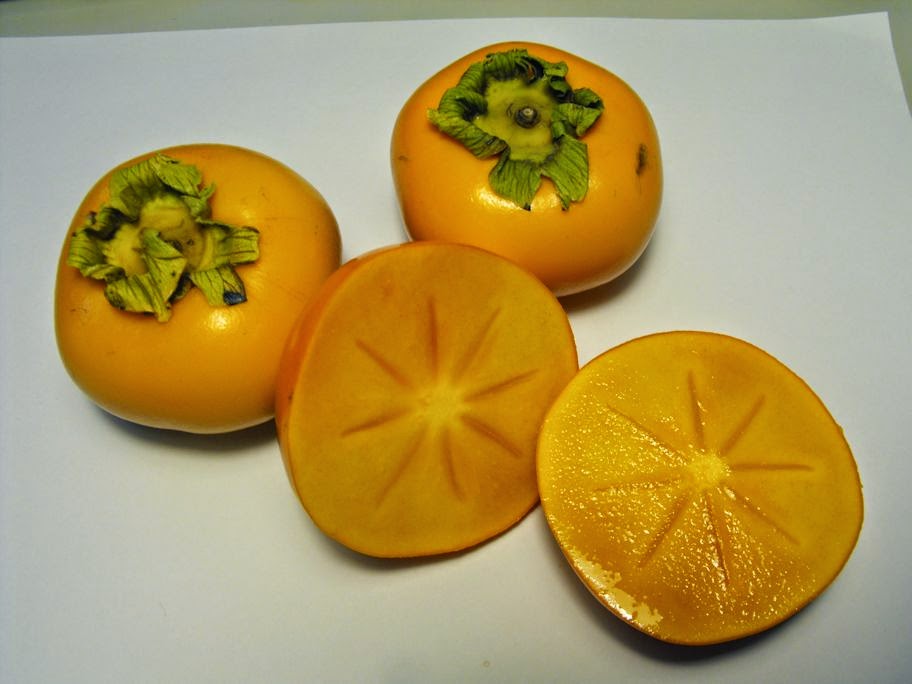 |
| Sharon-fruit or Persimmons ( Diospyros kaki) |
Hopefully I will be able to do most of these but don't worry I will still be catering to the Eye Candy crowd who want photos of beautiful flowers and nice scenery to look at. Oh and a couple of other things. The first is that I finally set up a Deviant Art account in which I have slowly been uploading some of my photos and art work onto the site. These can made into various products from postcards to coasters and art prints via the Deviant Art Portal. These will be supplemental to the postcards and greeting cards I have already had made but which will only be available in Samoa.
Setting up the Deviant Art account was to enable people outside of Samoa who might want some of these to be able to get them too.
I am also hoping to be able to get a book published this year using crowdfunding but still have some preliminary work to do on that.
Notes:
- I am using the taxonomical classification system used by ITIS (Integrated Taxonomic Information System). I have decided to use this system in order to avoid confusion as well as because it offers a comprehensive hierarchy from kingdom right through to subspecies whereas other sources only go as far as order or provide the names of some of the higher taxonomical ranks but only indicate "unclassified" rather than providing the rank.
- When and where possible I will endeavour to include alternatives classifications although I may limit this to occasions where an opportunity arises to discuss the reason for the different classifications.
- Taxonomical data used in this post was retrieved [April 16 2015], from the Integrated Taxonomic Information System on-line database, http://www.itis.gov.
Flora and Fauna - Plants and Critters Blog by Vincent Albert Vermeulen is licensed under a Creative Commons Attribution-NonCommercial-ShareAlike 3.0 Unported License.
Based on a work at http://plantsandcritters.blogspot.be/.
Permissions beyond the scope of this license may be available at http://plantsandcritters.blogspot.be/.
My other blogs
· Flora and Fauna - Plants and Critters (on plants, animals as well as gardening, conservation and environmental matters): http://plantsandcritters.blogspot.com/· The Blood of Souls (language, translation and etymology) : http://thebloodofsouls.blogspot.com/
· Whiskers on Kittens (Life with Kittens and Cats in general) : http://whiskersonkittens-vincent.blogspot.com/
Subscribe to:
Posts (Atom)