Notice

Please note that all content (photographs and text) are copyright of the author.

Monday, 29 July 2013

Forest in Summer - Part 1

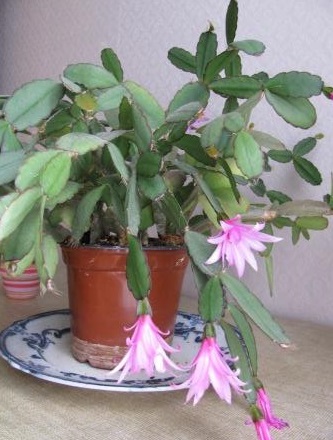
I arrived in Brussels as just in time to see and photograph this Christmas Cactus then when visiting the city hall of Forest I took some time to photograph some of the plants and flowers that were planted in the flower beds in front.

Christmas Cactus, Schlumbergera hybrides


Flora and Fauna - Plants and Critters Blog by Vincent Albert Vermeulen is licensed under a Creative Commons Attribution-NonCommercial-ShareAlike 3.0 Unported License.

Based on a work at http://plantsandcritters.blogspot.be/.

Permissions beyond the scope of this license may be available at http://plantsandcritters.blogspot.be/.

My other blogs

· Flora and Fauna - Plants and Critters (on plants, animals as well as gardening, conservation and environmental matters): http://plantsandcritters.blogspot.com/

· The Blood of Souls (language, translation and etymology) : http://thebloodofsouls.blogspot.com/

· Whiskers on Kittens (Life with Kittens and Cats in general) : http://whiskersonkittens-vincent.blogspot.com/

Sunday, 28 July 2013

Birds and flowers at Victoria Park in Sydney

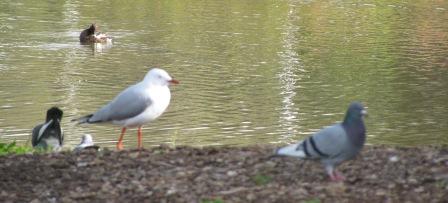
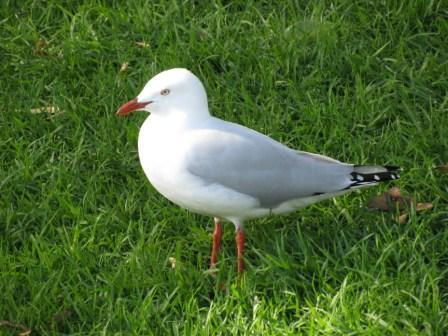
While in Sydney I visited Victoria Park in order to take some photos of the assortment of plants and especially the flowering plants they usually have there. As I was taking photos I realised that there were a number of bird species that congregate around the artificial lake and snapped a few of them to add to my collection.


Dusky Moorhen,  Gallinula tenebrosa

Dusky Moorhen,  Gallinula tenebrosa


Flora and Fauna - Plants and Critters Blog by Vincent Albert Vermeulen is licensed under a Creative Commons Attribution-NonCommercial-ShareAlike 3.0 Unported License.

Based on a work at http://plantsandcritters.blogspot.be/.

Permissions beyond the scope of this license may be available at http://plantsandcritters.blogspot.be/.

My other blogs

· Flora and Fauna - Plants and Critters (on plants, animals as well as gardening, conservation and environmental matters): http://plantsandcritters.blogspot.com/

· The Blood of Souls (language, translation and etymology) : http://thebloodofsouls.blogspot.com/

· Whiskers on Kittens (Life with Kittens and Cats in general) : http://whiskersonkittens-vincent.blogspot.com/

Saturday, 27 July 2013

Laying a boarder with concrete cap stones - PART 2


In the past I have used old 2 x 4 and even logs to create borders which have proved effective in all practical aspects of having border (definition, anti-encroachment and protection) the only problem has been that in general they are not particularly aesthetically pleasing unless you get some decent pieces of wood or logs. 


Old Poumuli tree trunk being used to mark border of an area to planted with Ti Plants and Egyptian Start Clusters (parallel to the Rain Lily flower bed)
The other material that I have used to some measure which has been effective although not as attractive as I would like has been old tires. Although in this case tires were not an option either.
Scrapping out of Navua Sedge, Kyllinga polphylla rhizomes and other grasses in order to extend the Pink Rain Lily Zeperanthes rosea flower bed. The aluminium sheet in the foreground was used to kill off grass underneath.

Fortunately after a visit to Apia Concrete Products I decided to try out concrete cap stones. Although use as flower borders is definitely not their intended use I found that they were perfect. They were just wide enough to create a nice wide but not too wide border and low enough to not overshadow the plants. At $1.90 Tala a piece they were reasonable although given how big the flower bed was I did end up spending a bit on them. Over several months ACP staff got used to me turning up to procure 10 or 20 cap stones at a time which was all I could fit in the back of the Terius.

Pebble inspecting laying of concrete cap stones
 I started by laying out one edge, then the long outer boarder. I did not have an equipment to make the corners etc so I just used a board, laying it inside the bed and laying the cap stones outside. Then I used that same board to make sure I had a straight edge.
Use of board to lay concrete cap stones (I know cord and pegs would have been better)
I alternated between laying the boarder and digging out the lawn infested with Kyllinga polphylla and Kyllinga nemoralis as well as pulling up clumps of Rain Lilies to separate and replant, although I also had hundreds of seedlings from seeds I had collected and planted earlier in the year.
 .
Pebble inspecting works
 It was slow tedious work and I was working on other projects, garden and other so it took forever but little by little the border and bed took shape.
Newly laid border with extended bed planted
 I also had constant help from my furry assistants whose enthusiastic contributions ranged from closely supervising me, checking to see if the boarder was properly laid and even assisting with the planting by quickly fertilising the upturned soil before I planted the bulbs, a practice which resulted in much washing of hands with bleach and offended looks from the kittens when I complained and begged them to at least wait until I had planted the bulbs before they made their contributions.
Third corner added
 
I had planned on getting some sand and relaying the concrete cap stones on it but due to time constraints and difficulties in getting the sand I ended up not doing this although ideally that would have been the best thing to do as I ended up with about 3 broken concrete cap stones due to small unnoticed bumps or in one case a small pebble which were harmless as they were until someone heavier than my feline assistants walked on and the weight of that against the hard packed earth was too much.

Pebble's assistant Puppywuppy inspects the corners


Additional Information:

Binomial Name: Zepheranthes rosea
Taxonomy: Phylum: Angiosperms – Class:  Monocots – Order: Asparagales – Family: Amaryllidaceae – Subfamily: Amaryllidoideae    Tribe : Hippeastrea   – Subtribe: Zephranthinae  – Genus: Zepheranthes – Species: Z. Rosea
Common names: Zepheranthes, Fairy Lily, Rainflower, Rain Lily, Zeypher Lily, Magic Lily, Atamasco Lily (English) kili’o’opu (Hawaiian) mo’u’upo’o (Tahitian)

Binomial Name: Kyllinga polphylla
Taxonomy: Phylum: Angiosperms – Class: Monocots – Subclass: Commelids – Order: Poales – Family: Cyperacea– Genus: Kyllinga – Species: K. Polyphylla
Common names: Navua sedge(English)

Binomial Name: Kyllinga nemoralis
Taxonomy: Phylum: Angiosperms – Class: Monocots – Clade: Commelids – Order: Poales – Family: Cyperacea– Genus: Kyllinga – Species: K. Polyphylla
Common names: ??? (English) kili’o’opu (Hawaiian) mo’u’upo’o (Tahitian)


Flora and Fauna - Plants and Critters Blog by Vincent Albert Vermeulen is licensed under a Creative Commons Attribution-NonCommercial-ShareAlike 3.0 Unported License.

Based on a work at http://plantsandcritters.blogspot.be/.

Permissions beyond the scope of this license may be available at http://plantsandcritters.blogspot.be/.

My other blogs

· Flora and Fauna - Plants and Critters (on plants, animals as well as gardening, conservation and environmental matters): http://plantsandcritters.blogspot.com/

· The Blood of Souls (language, translation and etymology) : http://thebloodofsouls.blogspot.com/

· Whiskers on Kittens (Life with Kittens and Cats in general) : http://whiskersonkittens-vincent.blogspot.com/


Friday, 26 July 2013

Laying a boarder with concrete capstones - PART 1


A few years ago (2011) I planted a long narrow strip of Pink Rain Lilies, Zepheranthes rosea at the back of our old family homestead at Alafua which grew magnificently, spreading by seed and bulb division. When it was in full bloom it was a startling profusion of pink that was truly stunning and delightful to see.

Zepheranthe rosea with Ninja Cat Clan Kittens (From Front to Back) Stoney, Rocky and Pebble.
So of course I could not help imagining what a slightly longer and much wider bed would look like. One of the problems that I had with this bed was the lack of definition or boarders delineating it from the lawn. This posed both aesthetic and practical problems. Aesthetically it looked messy and raggedly. Although I am a big fan of the English Cottage Garden which only looks unstructured compared to the French Formal Garden, a large undefined bed of flowers probably does not quite fall into English Cottage Garden definition. More importantly though were the practical considerations.

There were three issues that made having a clearly defined boarder critical for practical reasons. The first was that it would clearly define the flower bed and enable people (little people especially) to see where the flower bed started to avoid the plants being walked on or even driven over. The second issue was that from past experience it has been difficult to police the mowing and having a boarder would not only clearly identify the limits of the lawn but also provide a barrier of sorts. The third issue is related to the pestilent encroachment into the bed by various grasses which I have been trying to eradicate.

Kyllinga polyphylla
The primary culprits are Kyllinga polyphylla and Kyllinga nemoralis both which I have resorted to eliminating by either a slow miserable death due to lack of sun by covering them with come old corrugate iron roofing. The other method has been using a straight edge spade to scrape them up and out. The first is a long slow but painless process (for me) while the latter while assuring faster results is rather tedious and strenuous at times.

Flower of Kyllinga polyphylla

I have used both methods, the second for areas adjacent to beds or to clear the areas that I wanted planted immediately and the first for the huge patches of Kyllinga polyphylla in the centre of the huge back lawn as well as some areas adjacent to various flower beds as well as some smaller patches of Kyllinga nemoralis.


Kyllinga nemoralis
As for herbicides I abhor them so that has never been an option. I have heard of some natural herbicides such as coconut oil and other natural products being used instead of chemicals but was not able to get any and in any case I want to do a bit more research on them for any potential side effect to the other denizens of the gardens and surrounding areas of bush such as the resident Wattled Honeyeaters and Cardinal My, not to mention the squadrons of honey bees.
 

No herbicides are definitely not an option. If you want to know more about the dangerous and disastrous impact of chemical herbicides and pesticides from human health to environmental impact I have included some links below you might want to look at.


Stoney contemplates the proposed enlargement of the Rain Lily bed
So I wanted the boarders very clearly defined to give some structure to the bed as well as to protect the plants both from damage and incursions as well as to make it easier to maintain. The first thing I did was stake out the general area I was looking at extending the bed to. I wanted to make it the full length of the veranda but the presence of a lemon tree meant that that was not possible (especially since I have an aversion to cutting down trees unless absolutely necessary).

Additional information:

For more on Kyllinga nemoralis and Kyllinga polyphylla read my earlier post: Intriguing Plants - Weeds and Flowers
For more information on pesticides visit the following:

http://www.pan-germany.org/download/fact_paraquat2.pdf

Binomial Name: Zepheranthes rosea

Taxonomy: Phylum: Angiosperms – Class:  Monocots – Order: Asparagales – Family: Amaryllidaceae – Subfamily: Amaryllidoideae   Tribe : Hippeastrea   – Subtribe: Zephranthinae  – Genus: Zepheranthes – Species: Z. rosea

Common names: Zepheranthes, Fairy Lily, Rainflower, Rain Lily, Zeypher Lily, Magic Lily, Atamasco Lily (English) kili’o’opu (Hawaiian) mo’u’upo’o (Tahitian)


Binomial Name: Kyllinga polphylla

Taxonomy: Phylum: Angiosperms – Class: Monocots – Subclass: Commelids – Order: Poales – Family: Cyperacea– Genus: Kyllinga – Species: K. polyphylla

Common names: Navua sedge(English)


Binomial Name: Kyllinga nemoralis

Taxonomy: Phylum: Angiosperms – Class: Monocots – Clade: Commelids – Order: Poales – Family: Cyperacea– Genus: Kyllinga – Species: K. polyphylla

Common names: ??? (English) kili’o’opu (Hawaiian) mo’u’upo’o (Tahitian)

Flora and Fauna - Plants and Critters Blog by Vincent Albert Vermeulen is licensed under a Creative Commons Attribution-NonCommercial-ShareAlike 3.0 Unported License.

Based on a work at http://plantsandcritters.blogspot.be/.

Permissions beyond the scope of this license may be available at http://plantsandcritters.blogspot.be/.

My other blogs

· Flora and Fauna - Plants and Critters (on plants, animals as well as gardening, conservation and environmental matters): http://plantsandcritters.blogspot.com/

· The Blood of Souls (language, translation and etymology) : http://thebloodofsouls.blogspot.com/

· Whiskers on Kittens (Life with Kittens and Cats in general) : http://whiskersonkittens-vincent.blogspot.com/


Thursday, 25 July 2013

Sydney University Vist Part 3

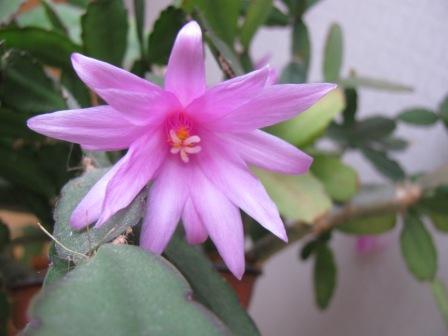
During a transit through Sydney and took the opportunity to visit Sydney University and was able to take some photos of some of the plants mainly Camellias. Unfortunately I did not have enough time to range around the huge campus let alone photograph the Great Hall and Quadrangle or any of the other old buildings that I have always admired.

Nor was I able to visit the Sydney Botanical Gardens as I had planned when making my booking. However, here are some photos of various plants and flowers that were there when I passed through as well as some serendipitous guest appearances.

Bird on Gymea Lily, Doryanthes excels


Gymea Lily, Doryanthes excels


Camellia

Clivia


Camellia

Camellia


Camellia

Camellia

Camellia

Camellia

Camellia

Camellia
Flora and Fauna - Plants and Critters Blog by Vincent Albert Vermeulen is licensed under a Creative Commons Attribution-NonCommercial-ShareAlike 3.0 Unported License.

Based on a work at http://plantsandcritters.blogspot.be/.

Permissions beyond the scope of this license may be available at http://plantsandcritters.blogspot.be/.

My other blogs

·         Flora and Fauna - Plants and Critters (on plants, animals as well as gardening, conservation and environmental matters)

·         The Blood of  Souls (language, translation and etymology)

·         Whiskers on Kittens (Life with Kittens and Cats in general)